

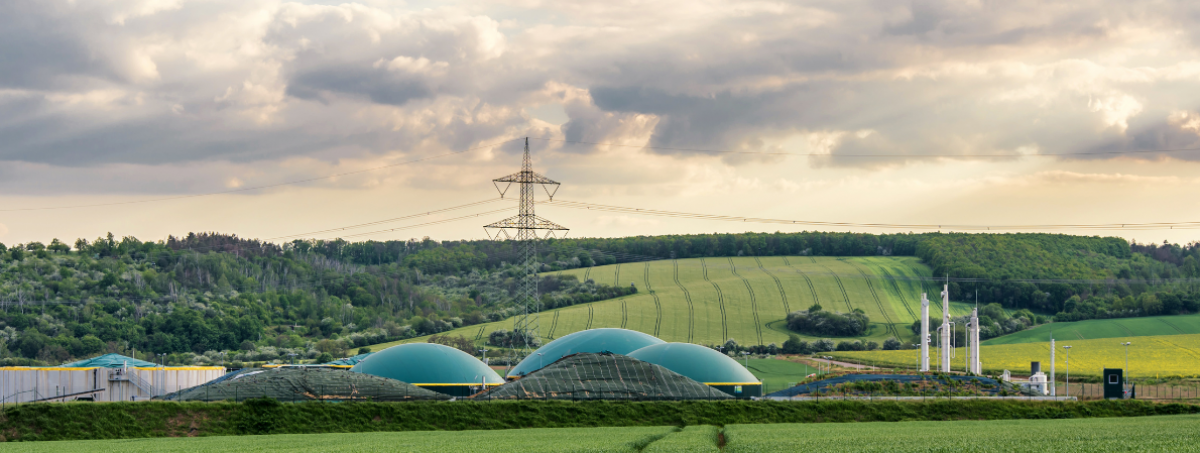
Ireland's renewable energy transition has long outpaced its infrastructure. That gap narrowed in March 2026 when the Commission for Regulation of Utilities approved reverse grid compression, removing an obstacle to biomethane injection into the gas network. The ruling, welcomed by Gas Networks Ireland as a key enabler, addresses a constraint threatening rural anaerobic digestion investment. With five years to Ireland's 2030 target, action of this kind is what the sector requires.
The approval is necessary, though insufficient on its own. Ireland's National Biomethane Strategy targets 5.7 TWh per year by 2030, covering roughly 10 per cent of national gas demand. In 2024, just two facilities injected biomethane into the grid, producing under 0.1 TWh. Progress demands action on capital access, planning reform, and demand stimulation — three pillars that remain underdeveloped.
Reverse compression tackles a key bottleneck in the Irish biomethane pipeline. Most anaerobic digestion plants connect to low-pressure networks, where local production exceeds demand. Without compressing gas into the higher-pressure transmission system, curtailment and flaring undermine economics. Philip Lee LLP notes Gas Networks Ireland flagged constraints across almost all non-city networks. The Commission increased the Flexibility Pot from €10 million to €22.85 million; Gas Networks Ireland estimates the scheme could unlock 437 GWh — 7.5 per cent of the 2030 target.
Ireland's lag behind European peers underlines the urgency. The European Biogas Association's 2025 Statistical Report recorded 1,620 biomethane-producing facilities at end-2024, supported by €28.4 billion in private investment. Ireland's roughly 30 biogas plants are marginal in a market producing 22 billion cubic metres annually. Germany, with thousands of plants built on decades of feed-in tariff policy, shows how certainty drives capital. Ireland's €40 million grant fund is welcome but modest given the need for 200 new plants.
Ireland's agricultural base presents a competitive advantage the sector has yet to exploit. The country generates some 40 million tonnes of livestock waste annually, placing it among the highest per-capita biomethane potential in Europe, per the NNFCC. On a dairy farm of 200 cows, a digestion plant prevents approximately 567 kg of CO₂-equivalent per day. The Local Power and Biogest venture for the Curragh Biogas project in Co. Meath signals capital is mobilising.
Three priority actions are required. The Commission should finalise a permanent framework for reverse compression, providing certainty beyond the interim arrangement. The Oireachtas Joint Committee on Climate, Environment and Energy's findings on capital barriers and planning delays should be resolved through a streamlined pathway with defined timelines across the Environmental Protection Agency and local authorities. The Renewable Heat Obligation should generate near-term biomethane demand, incentivising offtake agreements that underpin financing.
The Commission's ruling removes one meaningful obstacle, but Ireland's biomethane sector remains in the early stages of a formidable buildout. Biomethane is globally recognised as a strategic asset for grid resilience, decarbonisation, and rural development. Europe is committing tens of billions to this transition; Ireland's feedstock advantages position it well. Whether the regulatory and planning ecosystem assembles at the pace the 2030 target demands is the defining challenge.
(The views expressed by the writer are his/her own and do not necessarily reflect the views or positions of BusinessRiver.)







.png)