


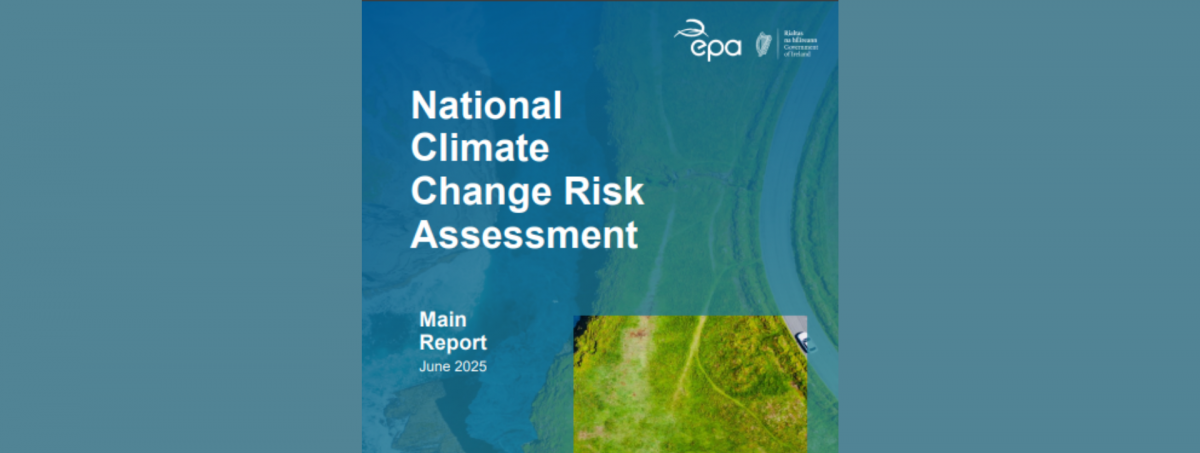
Ireland now has its most comprehensive picture of how climate change will shape its economy. The Environmental Protection Agency published Ireland’s first National Climate Change Risk Assessment on 4 June 2025, identifying 115 risks across energy, transport, water security, public health, food production and ecosystems. Developed with a 133-member stakeholder group, it provides the statutory evidence base for every Sectoral Adaptation Plan in Ireland. For green sector executives, it is a market signal and a planning tool.
The assessment marks a significant step in Ireland’s approach to climate adaptation. Of the 115 risks, five require urgent action within five years: the top two are damage to energy and communications infrastructure from extreme wind, and damage to buildings and transport from coastal erosion and flooding. These findings will shape procurement, planning and investment across construction, energy and water. The commercial dimensions most relevant to green sector organisations are infrastructure resilience, nature-based solutions and financial risk disclosure.
Infrastructure resilience is the most immediately actionable dimension. Storms in February 2025 caused outages affecting between 395,000 and 768,000 homes and businesses, with cascading impacts on communications and water treatment, per the NCCRA Main Report. Ireland’s €18.9 billion grid investment programme under Price Review 6, approved by the CRU in December 2025, provides a direct funding mechanism within which the assessment’s infrastructure findings can be operationalised.
Nature-based solutions represent the second significant commercial frontier. The NCCRA recognises biodiversity and ecosystem health as cross-cutting risk drivers, consistent with Ireland’s National Biodiversity Action Plan and the EU Nature Restoration Regulation now taking effect. Coastal wetland restoration, urban green infrastructure and floodplain management are identified as adaptation tools and investment opportunities. The Infrastructure, Climate and Nature Fund, capitalised at €14 billion, is the primary public vehicle for nature-based adaptation.
The financial risk disclosure dimension will increasingly matter to boards and investors. The NCCRA provides the Irish evidence base for the Taskforce on Climate-related Financial Disclosures and the EU Taxonomy Regulation, both requiring disclosure of physical climate risks. The European Environment Agency’s 2025 report confirmed physical climate risk is influencing insurance pricing across Europe. Companies integrating NCCRA sector-specific data will be better placed to meet disclosure obligations and manage insurance exposure.
Three actions would help green sector organisations capitalise. First, businesses with long-lived physical assets should conduct site-level risk screening against the five urgent categories, using the Climate Ireland portal for specific mapping at no cost. Second, companies in infrastructure, construction or land management should engage with Sectoral Adaptation Plans now being revised. Third, boards with TCFD or EU Taxonomy obligations should integrate the NCCRA as Ireland’s national physical risk reference in their disclosure methodology.
The National Climate Change Risk Assessment represents a foundational shift in how Ireland plans and invests in resilience. Globally, adaptation investment is accelerating as physical climate risk is priced into bonds, insurance and infrastructure finance. Ireland’s NCCRA aligns national planning with the commercial realities green sector organisations already face. The assessment identifies the sectors and timelines through which resilience is built and value created.
(The views expressed by the writer are his/her own and do not necessarily reflect the views or positions of BusinessRiver.)










.png)