

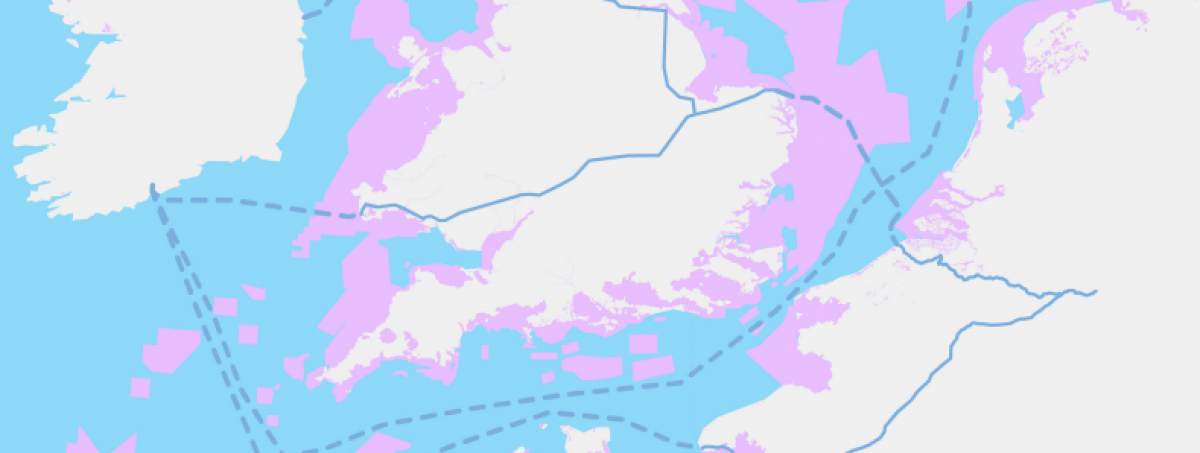
The global race to build credible green hydrogen supply chains has a compelling new entrant. The Irish government published the Exporting Hydrogen from Ireland study on 6 February 2026, commissioned from Arup under Action 8 of the National Hydrogen Strategy. The report examines how Ireland’s offshore wind resource could supply European markets where green hydrogen is needed in hard-to-electrify sectors. For green sector executives, it reframes Ireland’s energy ambition toward international export opportunity.
The study’s central finding is clear: Ireland’s renewable resource base could support green hydrogen production well in excess of domestic needs. Under a base scenario linked to 3.75 gigawatts of offshore wind, Ireland could produce approximately 215 kilotonnes of renewable hydrogen per year, equivalent to 7.2 TWh. Atlantic wind positions the country as a net exporter, with the export case resting on production scale, infrastructure and European market demand.
Ireland’s hydrogen production potential is grounded in an offshore wind pipeline with nearly 4 gigawatts contracted through the ORESS auction programme. The Climate Action Plan target of 2 gigawatts of non-grid offshore wind by 2030 is specifically designed to power hydrogen electrolysis, creating a dedicated production pathway outside the electricity system. The Hydrogen Taskforce, launched in July 2025, coordinates government, industry and research institutions across infrastructure development and policy alignment.
The study’s most commercially actionable finding concerns export routes. Pipelines are identified as the most cost-effective pathway for large-scale exports, and repurposing existing Ireland-Britain gas interconnectors is assessed as significantly cheaper than new-build infrastructure. Shipping is viable for derivatives such as ammonia and methanol. Ireland has signed a Joint Declaration of Intent with Germany on hydrogen supply, and Project HYreland is evaluating export routes at ESB’s Moneypoint and Aghada.
European demand provides the commercial logic for the export case. REPowerEU set a target of 20 million tonnes of renewable hydrogen annually by 2030, while Germany and the Netherlands face demand in sectors where electrification is not feasible. Ireland’s Atlantic position, with wind resources among Europe’s strongest, provides a structural cost advantage in producing certified green hydrogen to EU renewable fuels of non-biological origin standards.
Three priority actions would strengthen the export position. First, the EU Hydrogen and Decarbonised Gas Market Package must be transposed by 2026, establishing certification so Irish hydrogen qualifies for European trading frameworks. Second, the Hydrogen Innovation Fund, planned for operation by 2028, should prioritise export infrastructure feasibility, including pipeline repurposing and offshore production hub development. Third, port planning in the Shannon Estuary and Cork Harbour should be integrated with the hydrogen export roadmap.
The Exporting Hydrogen from Ireland study marks a substantive shift from national decarbonisation policy to international energy export strategy. Globally, the green hydrogen market is still forming, but infrastructure decisions taken now determine which nations supply it at scale by the late 2030s. Ireland’s Atlantic wind resource, offshore pipeline and proximity to European demand give it a credible position among potential leading exporters. The pace at which the regulatory and financing framework assembles is the defining question for the decade ahead.
(The views expressed by the writer are his/her own and do not necessarily reflect the views or positions of BusinessRiver.)










.png)