

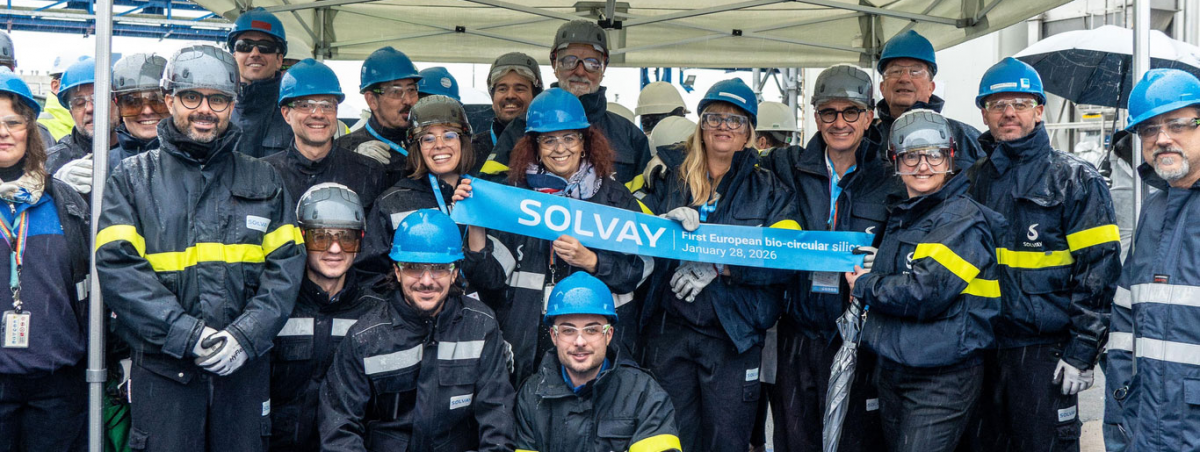
Solvay, the Belgium-headquartered global chemicals company, has inaugurated a bio-circular silica facility at its production site in Livorno, Italy, advancing lower-emissions materials for industrial and mobility applications. The new plant produces highly dispersible silica using bio-based sodium silicate derived from rice husk ash, an agricultural by-product.
Automotive World noted in an article that according to Solvay, the production process reduces CO₂ emissions by 35% per tonne of silica compared with conventional methods.
By sourcing rice husk ash locally, the facility establishes a circular value chain that connects agriculture, materials processing and advanced manufacturing within the region.
Highly dispersible silica plays a critical role in tyre manufacturing, where it is used to reduce rolling resistance. This contributes to lower fuel consumption in conventional vehicles and extended battery range in electric vehicles, making material innovation a lever for both performance and efficiency across the transport sector.
Solvay said tyre manufacturers using its circular silica can reach up to 15% recycled or renewable materials in tyre composition. This supports wider industry ambitions to achieve 40% recycled or renewable content by 2030, while maintaining safety and performance standards.
“By acting now, Solvay is helping tire manufacturers prepare for future EU requirements and meet their own sustainability goals,” said Philippe Kehren, chief executive of Solvay.
“Livorno is a tangible example of how we turn circular economy principles into industrial reality,” Kehren added.
Jana Striezel, head of Purchasing at Continental Tires, said: “Solvay has managed to transform an agricultural byproduct into a high-performance material on an industrial scale. We are looking forward to integrating more and more rice husk ash silica as a recycled material in our tire production.”
Discover the full details behind Solvay’s circular materials strategy in the complete article.









.png)