


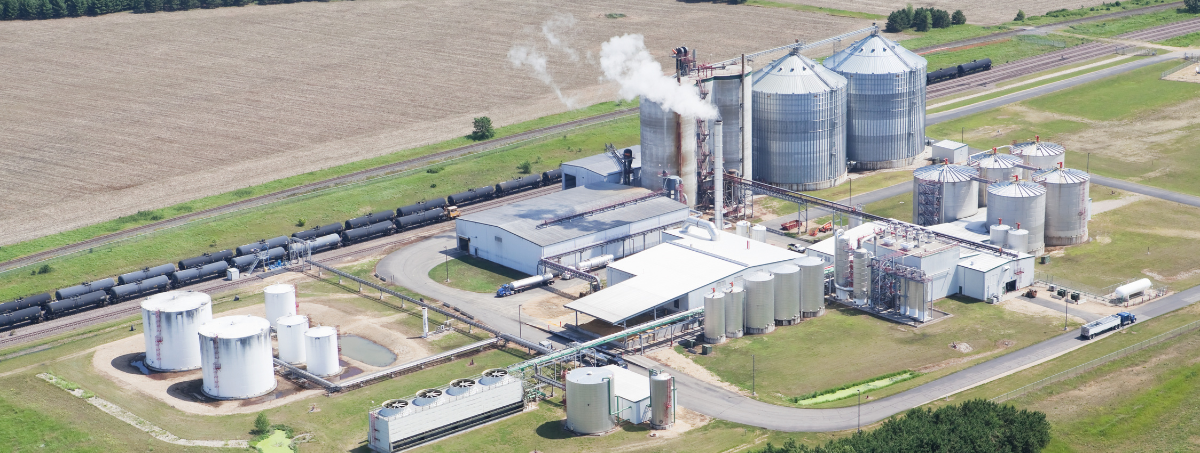
Ireland's first on-farm biorefinery and anaerobic digestion demonstration plant has opened at Shinagh Estates Demonstration Farm in County Cork, part of the Farm Zero C project and among the largest facilities of its kind in the world.
Shinagh Estates is owned jointly by four West Cork dairy co-operatives, Bandon, Barryroe, Drinagh and Lisavaird, which together form Carbery Group. The €3 million plant will also be used by Rural BioReFarmeries, a project coordinated by Munster Technological University and backed by about €7.35 million in EU funding through the Circular Bio-based Europe Joint Undertaking, to test the model's potential for replication across European grassland regions.
The structural driver is the EU's push for protein self-sufficiency and strategic autonomy, which is turning underused grassland biomass into a policy priority rather than a single-purpose feedstock. Green biorefining separates fresh grass into a fibre-rich press cake for livestock feed and a juice stream from which protein and other bio-based ingredients can be recovered, with remaining material directed to anaerobic digestion for renewable energy and biofertiliser.
The facility is designed to process fresh grass into high-protein animal feed, a fibre fraction usable in packaging and livestock feed, bioenergy and biofertiliser, with potential human food ingredients under future development. It will operate as a testing and learning platform to validate feed and bio-based products, business models and farmer engagement ahead of wider deployment.
MTU and BiOrbic's James Gaffey said the facility, "one of the largest of its kind in the world, is a key development given the importance of grassland to our rural economy and farmers," adding that it "places Ireland firmly as a leading player in this emerging innovation space." Virginia Puzzolo, head of programme at the Circular Bio-based Europe Joint Undertaking, said grass is "a widely available but underused resource in Europe" and that demonstrating its potential "can contribute to reducing the EU's protein deficit while strengthening the EU's strategic autonomy."
For the sector, the Shinagh plant gives grassland farmers a working template for diversifying income beyond livestock feed, reducing exposure to volatile international feed and energy markets as the technology moves toward commercial-scale deployment.
Source: irishexaminer.com / cordis









.png)