

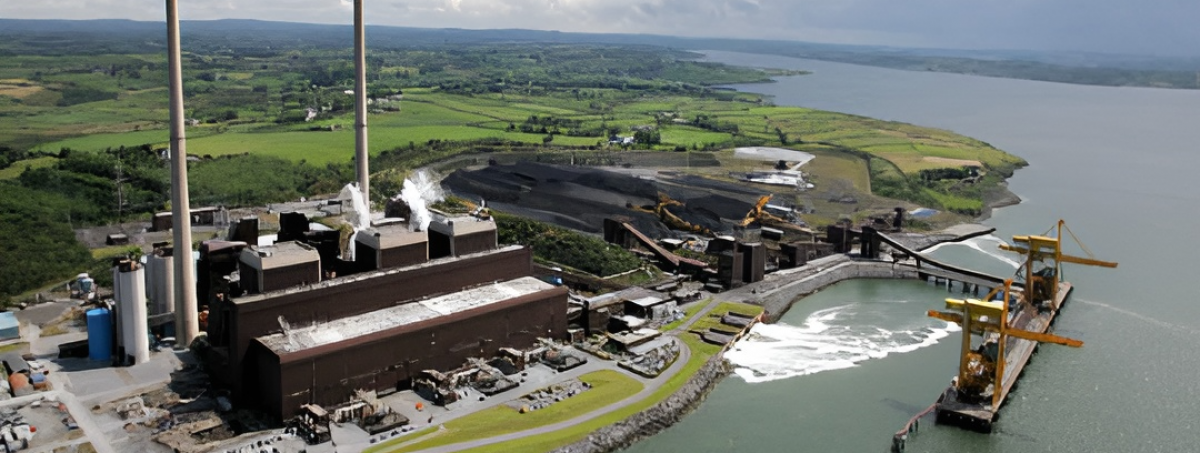
The closure of coal generation at ESB Moneypoint in June 2025 marks the clearest structural shift in Ireland’s industrial emissions in two decades. The Environmental Protection Agency published its preliminary EU ETS analysis on 9 April 2026, confirming that power generation and industry emissions fell by 5.5 per cent to 10.67 million tonnes of CO₂. Since 2005, Ireland’s ETS-covered sectors have reduced emissions by over 52 per cent. For green sector executives, the 2025 data is a structural milestone.
The findings confirm a transition that is accelerating. The 49 per cent reduction in emissions from Moneypoint demonstrates the scale of change achievable when infrastructure decisions align with carbon pricing. Renewable electricity generation, net imports and industrial efficiency drove the remaining reductions. The commercial dimensions most relevant to green sector organisations are expanding ETS2 coverage, the industrial decarbonisation pipeline and the sustainable aviation fuel opportunity in aviation emissions.
The power sector data is the most immediately instructive. Renewable electricity’s share of national demand rose one percentage point in 2025, while net electricity imports grew from 14 to 17 per cent of demand. Ireland’s €18.9 billion grid investment programme under Price Review 6 provides the enabling infrastructure for continued fossil displacement. The power sector is the strongest category in the Irish ETS, with further gains as offshore wind moves toward delivery.
The industrial ETS data carries important commercial signals. The 117 sites that reported 2025 emissions include cement, lime, oil refining, food and drink, pharmaceuticals and semiconductors. The 52 per cent cumulative reduction since 2005 confirms that carbon pricing has driven sustained change across Irish industrial operations. Remaining abatement potential in process heat and industrial electrification represents a substantial investment pipeline.
The aviation dimension introduces the most forward-looking commercial consideration. Emissions from flights within the European Economic Area reported to Ireland rose by almost 2 per cent in 2025, exceeding pre-pandemic levels. The EU’s ReFuelEU Aviation Regulation mandates SAF blending of 2 per cent at EU airports from 2025, rising to 6 per cent by 2030 and 70 per cent by 2050, creating a supply chain opportunity for Irish green energy and agri-food sectors.
Three actions would help green sector organisations capitalise. First, ETS-covered industrial companies should benchmark their trajectory against tightening allowance supply, commissioning decarbonisation roadmaps ahead of the next allocation period. Second, businesses in buildings, road transport and additional industry should begin ETS2 compliance planning now, as the regime enters application from 2027. Third, agri-food and energy companies should assess SAF production potential against escalating ReFuelEU mandates, where Irish feedstock and biomethane offer a credible competitive position.
The EPA’s 2025 EU ETS analysis marks a genuine milestone in Ireland’s decarbonisation of its largest emitting sectors. Carbon pricing is expanding globally in scope and ambition, and the Irish ETS confirms that well-designed carbon markets deliver measurable, sustained reductions over time. The Moneypoint closure marks the beginning of more complex work across industrial heat, aviation and sectors entering the ETS2 regime. Ireland’s green sector is well positioned to lead that next phase.
(The views expressed by the writer are his/her own and do not necessarily reflect the views or positions of BusinessRiver.)










.png)